IN THIS EPISODE …
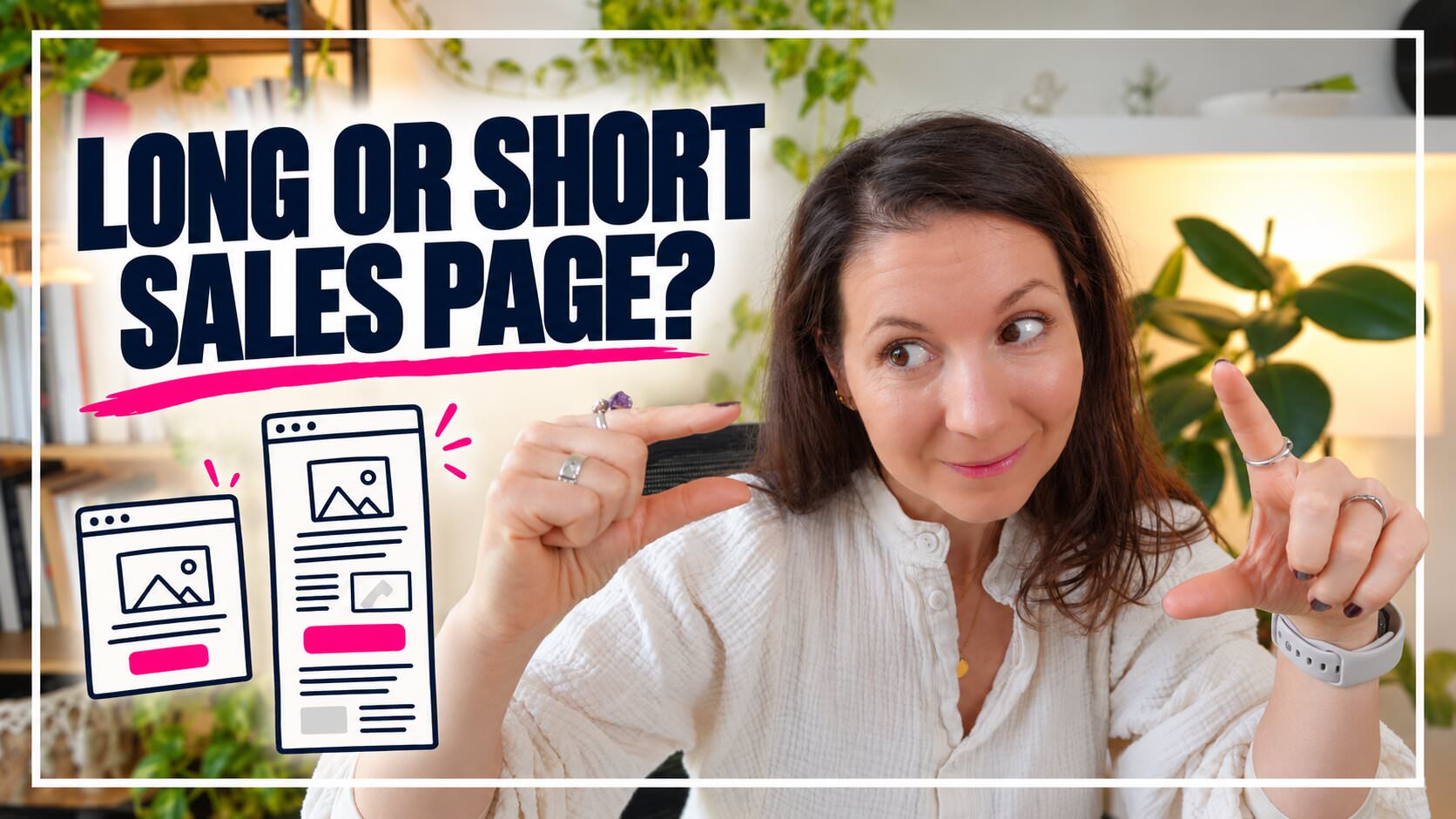
How long should a sales page be? Instead of “it depends”, I answer with three simple questions about price, where your visitors come from and how aware they are, plus the parts every sales page needs whatever its length.
// LINKS MENTIONED ⇩
- The Client Flow Check: a short quiz that shows where your client flow is breaking
- Client Machine: my step-by-step program for building a freebie, email and offer system
- How I Get Clients Without Posting Every Day (video)
FREE
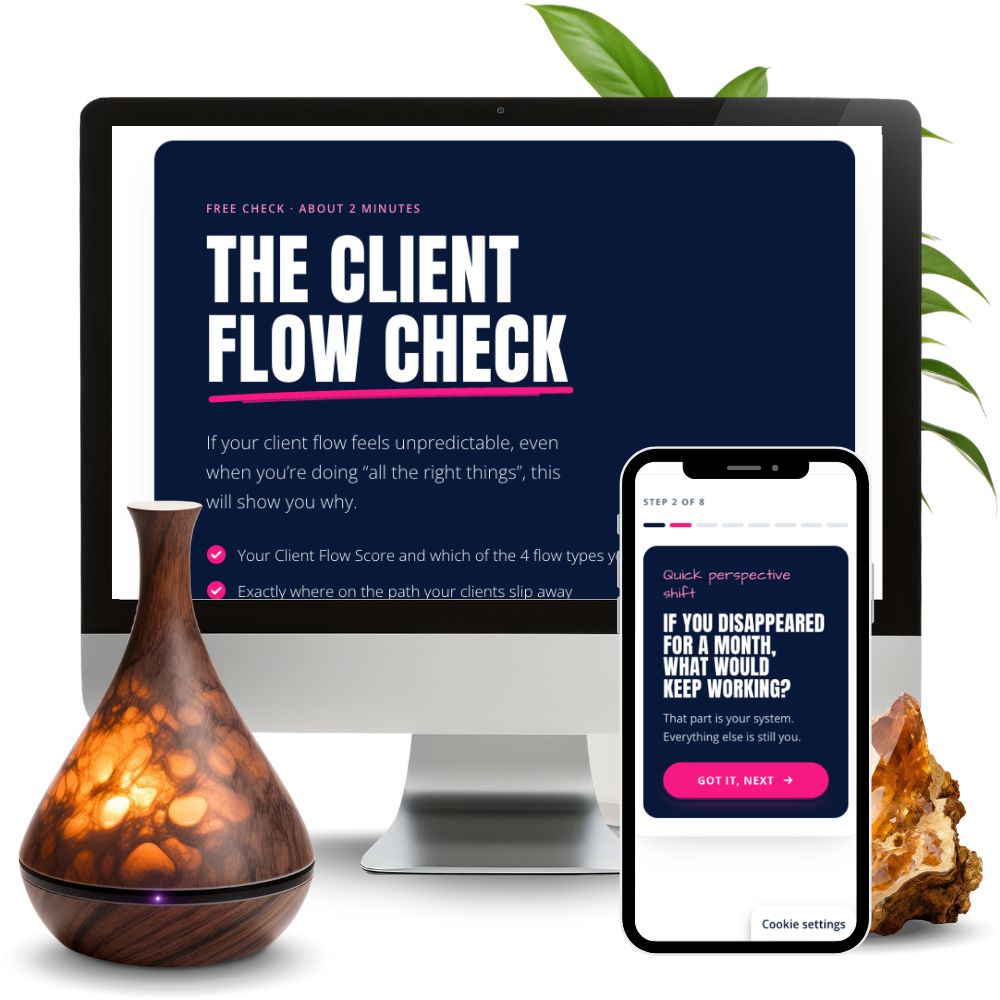
The Client Flow Check
The Client Flow Check helps you identify what’s getting in the way of consistent inquiries, so you can decide what to work on next.
PREFER TO READ?↓
How Long Should a Sales Page Be? 3 Questions That Give You the Answer
A sales page should be long enough for your potential client to make an informed decision about whether to buy, and not one word longer. The right length depends on three things: how much your offer costs, where your visitors come from, and how aware they already are of their problem and your solution.
Below I go through each of these three questions, explain the five stages of awareness, and share the parts every sales page needs no matter how short it is. I’ve written and designed a lot of sales pages over more than ten years, and this is the question I hear most often.
Why length is rarely the real problem
Here’s what I see all the time. People are convinced their sales page is too long or too short, so they cut it or add more, and nothing really changes. By nothing, I mean sales.
A page that’s too short doesn’t give your potential client enough to decide. A page that’s too long can lose their attention. But you don’t fix either of those by counting words. You fix it by asking what your visitors need to know before they can say yes or no.
Question 1: How much does your offer cost?
A higher-priced offer usually needs a longer, deeper page, because people need more information and more trust before they invest in you and your offer. A lower-priced offer can be shorter, and some sections can be combined.
This isn’t an absolute rule. Price can influence the length, but the key parts of the page always stay.
Question 2: Who is landing on your page, and from where?
A visitor from your email list usually already knows you and your offer, unless they’ve only just joined. They need a shorter page, just enough to order. A visitor who just clicked a Facebook ad and has never heard of you usually needs much more before they can decide.
That means the same offer can need two different pages. What I usually recommend is one more complete page for cold visitors and one shorter version for a specific campaign, for example after a webinar or a video series.
And sometimes the sales page isn’t the problem at all. People never even get to it, or they arrive when they’re not ready yet. If you want to see where your client flow actually breaks, take the Client Flow Check. It’s a free quiz with a few quick questions, and you don’t need to sign up.
Question 3: How aware are your visitors?
This is probably the most important question. It comes from Eugene Schwartz, one of the most famous copywriters, who described five stages of awareness in his book Breakthrough Advertising. These stages tell you not only how long your page should be, but also what goes on it and in what order from top to bottom.
The 5 stages of awareness
- Unaware: they don’t even know they have a problem. You need to show that the problem exists, educate, give proof and explain the consequences. Think of someone selling a back pain solution to people who don’t feel any pain yet. We usually don’t write sales pages for this group, they first need content.
- Problem aware: they know their problem but not the solution. You need empathy and an explanation of the real cause of their problem. For example, a woman in her 40s who feels irritable all the time may not know it can be caused by a hormonal imbalance.
- Solution aware: they know a solution exists and they’re comparing offers. You need proof, results, numbers and a clear explanation of what makes your offer different. “I work from the heart” isn’t unique enough to make someone buy.
- Product aware: they know your offer. The page can be shorter, because they already understand the problem and the solution. For people on your email list, you can create a short page that starts with the product-aware section.
- Most aware: they’re ready to buy. This is the shortest page: the investment, a summary of what they get and a clear call to action.
The rule of thumb is simple: the less aware your visitors are, the longer your page usually needs to be.
What every sales page needs, whatever its length
No matter how short your page is, some things always stay:
- A clear presentation of your offer, including what’s included.
- Call-to-action buttons. The last thing visitors see on the page should always be the button to buy.
And rule number one: never send visitors away from your sales page to another page. Extra information goes into a click-to-open section or further down the page. A mistake I see often is a short “about me” section with a “read more about me” link that sends visitors to the About page. It’s a great link anywhere else, but on a sales page you don’t want to send people away when they’re already getting ready to buy.
Write the content first, then design the page
One more tip, and as a designer this one matters to me. Write all the content first, all the way to the end, and only then design the page. Never do both at the same time. When you design while you write, you start counting words to fit the design, and the page loses what your potential clients need to decide.
So, how long should your sales page be?
Ask yourself three questions:
- How much does your offer cost?
- Where do your visitors come from?
- How aware are they?
But a sales page is only the last part of the system. If people don’t arrive warm and ready, even a perfect page won’t sell. In my article on how I get clients without posting every day, I show the freebie, email and offer system that brings people to the page ready to decide. If you’d like to build that system step by step, have a look at Client Machine.
FAQ
Is a long or short sales page better?
Neither is better on its own. A longer page suits higher prices and cold visitors who don’t know you yet. A shorter page works for lower prices and for people who already know your offer, for example your email subscribers.
How long should a sales page be for a low-priced offer?
It can usually be shorter, and some sections can be combined. It still needs a clear presentation of the offer, what’s included and a call-to-action button at the end.
Should I have different sales pages for different audiences?
It often makes sense. I usually recommend one complete page for cold visitors and a shorter version for a specific campaign, such as after a webinar or video series, when visitors already know you.
What are the five stages of awareness?
Eugene Schwartz described five stages: unaware, problem aware, solution aware, product aware and most aware. The less aware your visitors are, the more your page needs to explain before they can decide.
Should I link to other pages from my sales page?
No. Keep visitors on the sales page. Put extra details in a click-to-open section or further down the page instead of linking to your About page or other content.

Leave a Reply